UX DESIGN & IMPLEMENTATION
Looptroop
COMPANY
Chalet
ROLE
Web Designer
duration
Web Design
Team
4 Designers
3 Developers
As the Product Designer, I:
Project description
Blues is a leading music streaming platform aimed at independent artists and listeners seeking unique, under-the-radar tracks. As the company looked to scale, they needed a website overhaul that would enhance user experience, streamline content discovery, and increase conversion rates for premium memberships.
Why Did This Problem Exist?
Challenge
The original Blues website had an outdated interface, making it difficult for users to navigate and discover new music.
Ways of working
The original Blues website had an outdated interface, making it difficult for users to navigate and discover new music.
Process
This category details the step-by-step approach taken during the project, including research, planning, design, development, testing, and optimization phases.
The home screen lacked a clear focal point, creating decision paralysis.
What Testing Revealed
Users hesitated 7.8 seconds before first tap. "Wait, who's riding? I haven't even told it where I'm going yet." Wrong question, wrong time.
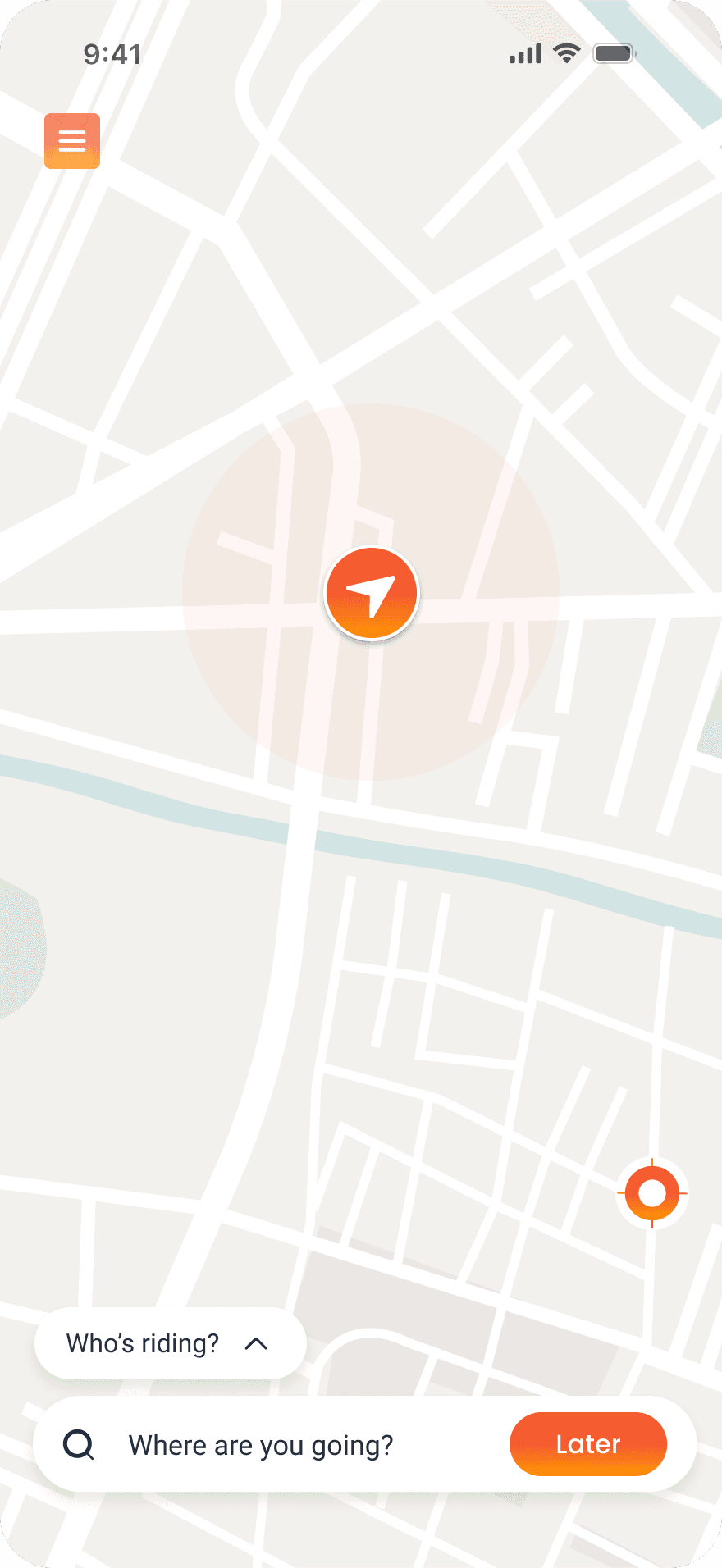
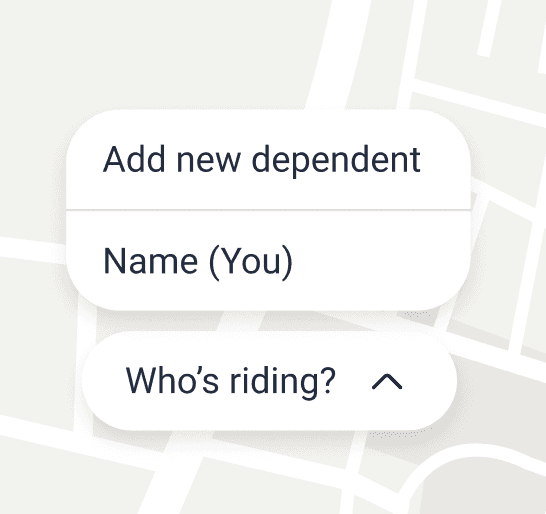
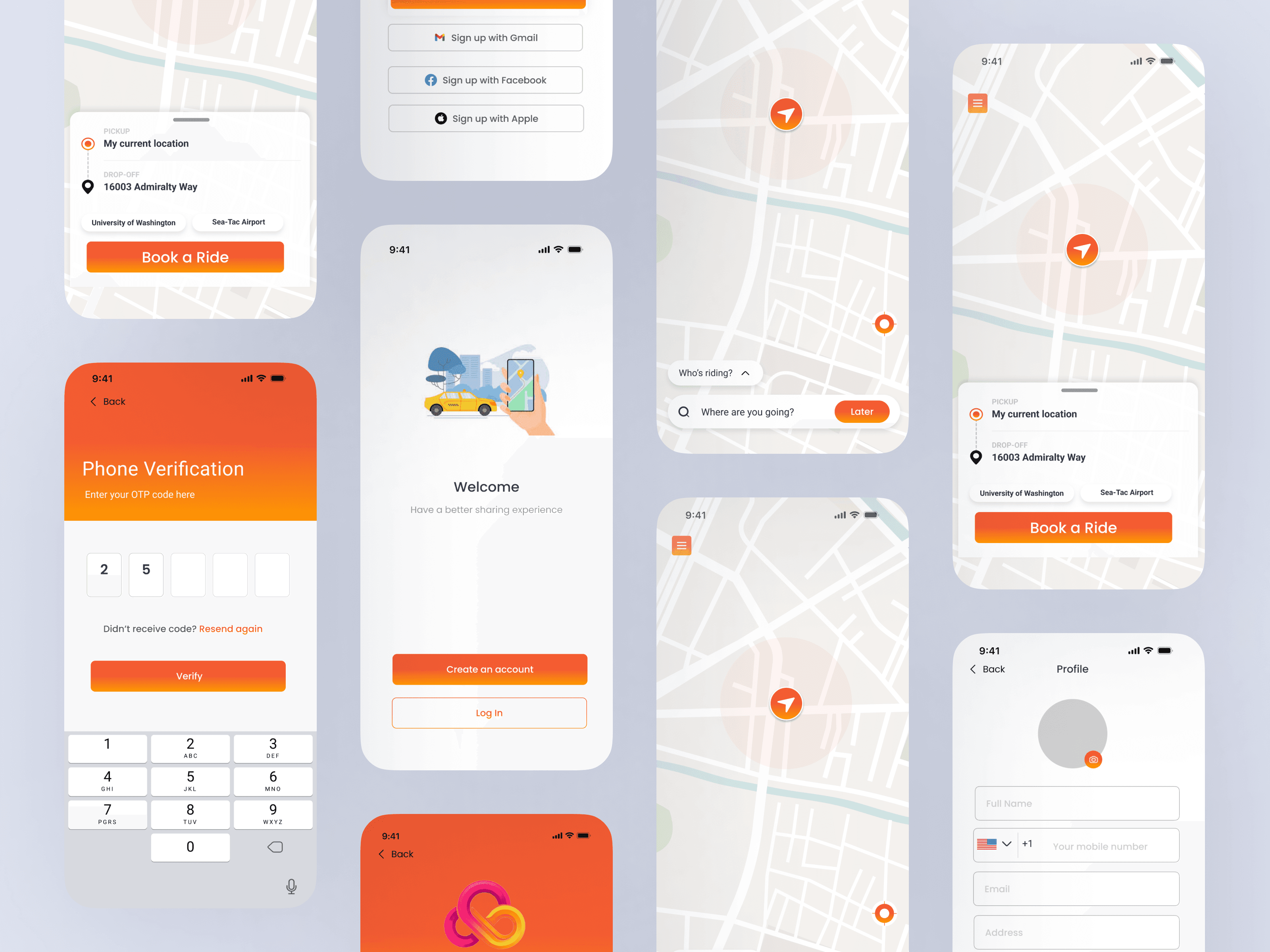
"Who's riding?" modal interrupts before user can orient
Low discoverability of safety-critical features
Poor visual hierarchy and inconsistent UI patterns
Outdated search and destination flow
Research Methods
To understand why users were struggling, we conducted multiple research activities:
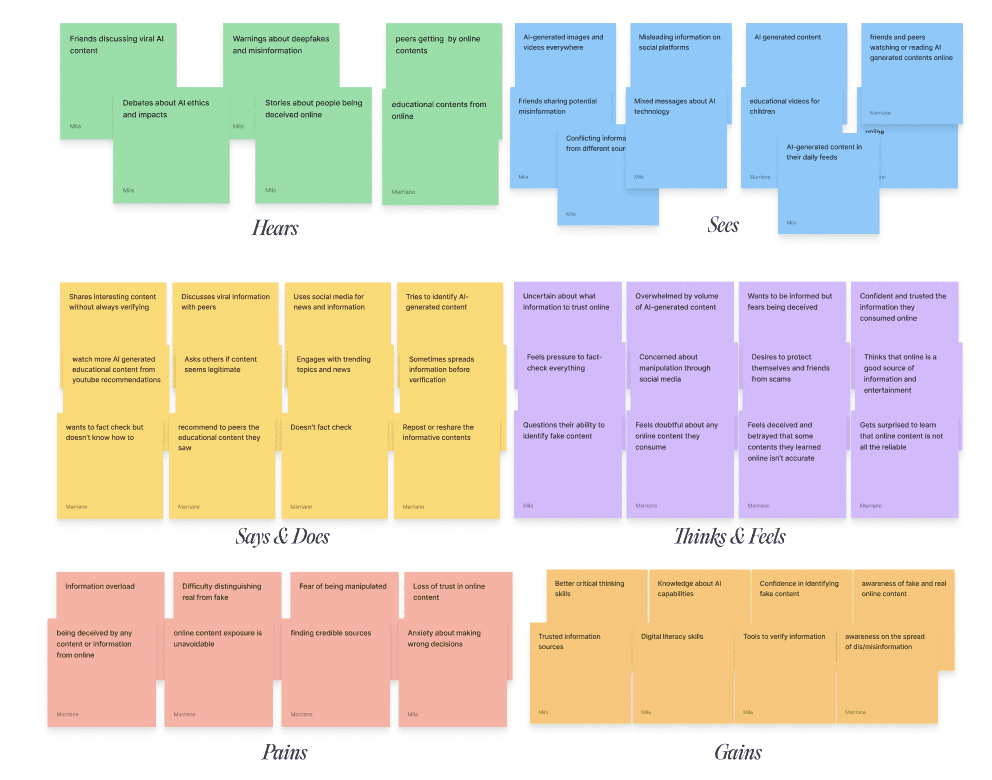
Think-aloud protocol — Asked participants to verbalize their thoughts as they attempted tasks. Revealed confusion points in real-time.
Follow-up interviews (n=6) — Deeper conversations with participants who struggled. Explored their context: work schedules, childcare, facility visiting hours.
Follow-up interviews (n=6) — Deeper conversations with participants who struggled. Explored their context: work schedules, childcare, facility visiting hours.
Screen recording analysis — Reviewed all session recordings, timed hesitation periods, noted where users looked and what they tried to click.
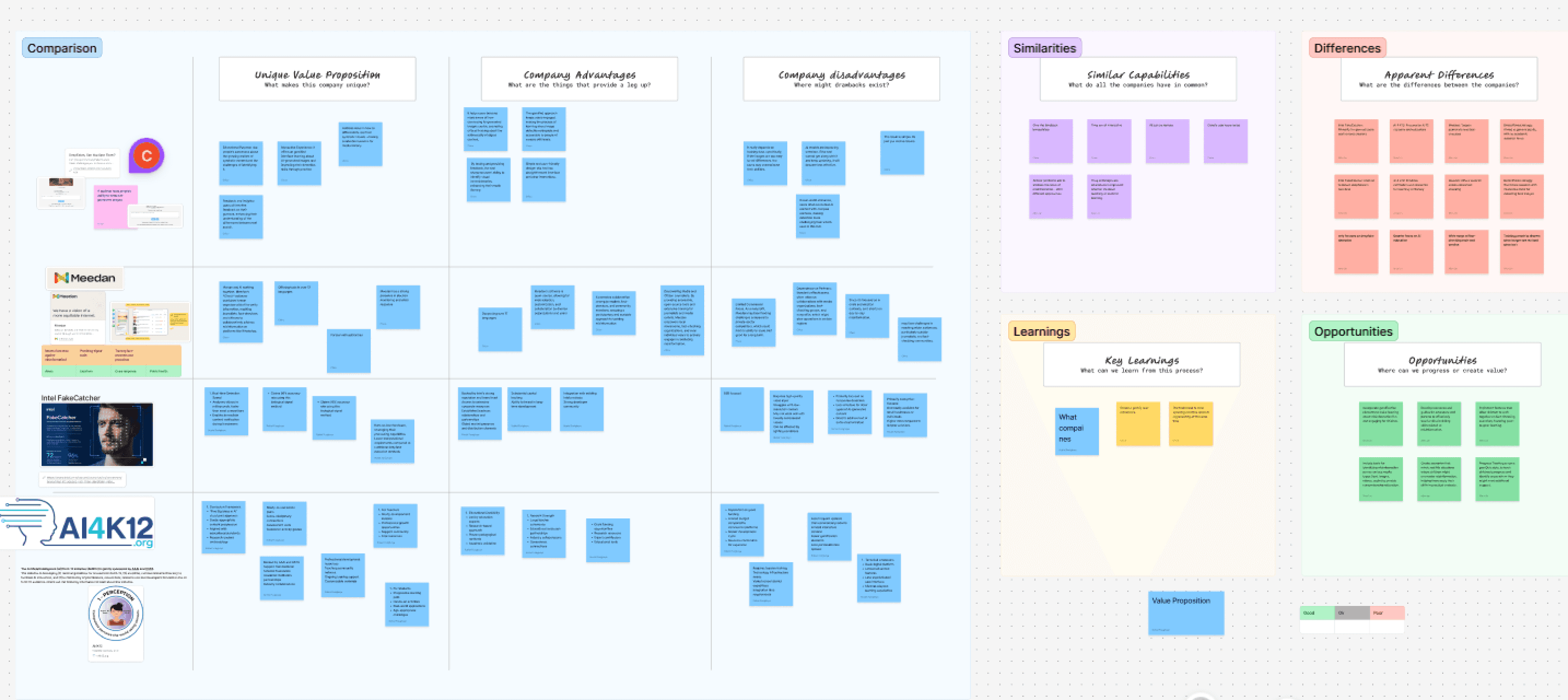
Competitive analysis — Tested Uber, Lyft, HopSkipDrive, Careem Kids etc, Via booking flows ourselves to identify patterns in successful rideshare apps.
Research Insight
Visitation = Planned, Not Spontaneous
100% of participants had already coordinated with facility visiting hours before opening the app
Question Order Matters
Users think in sequence: Where → When → Who"
"Asking 'Who's riding?' before 'Where?' confused users.
Map = Wrong Mental Model
Not one participant used the map to explore. All tried to type immediately.
The Central Insigh
Users don't want options at the entry point. A focal point isn't optional; it's the foundation of usable design.
Solution
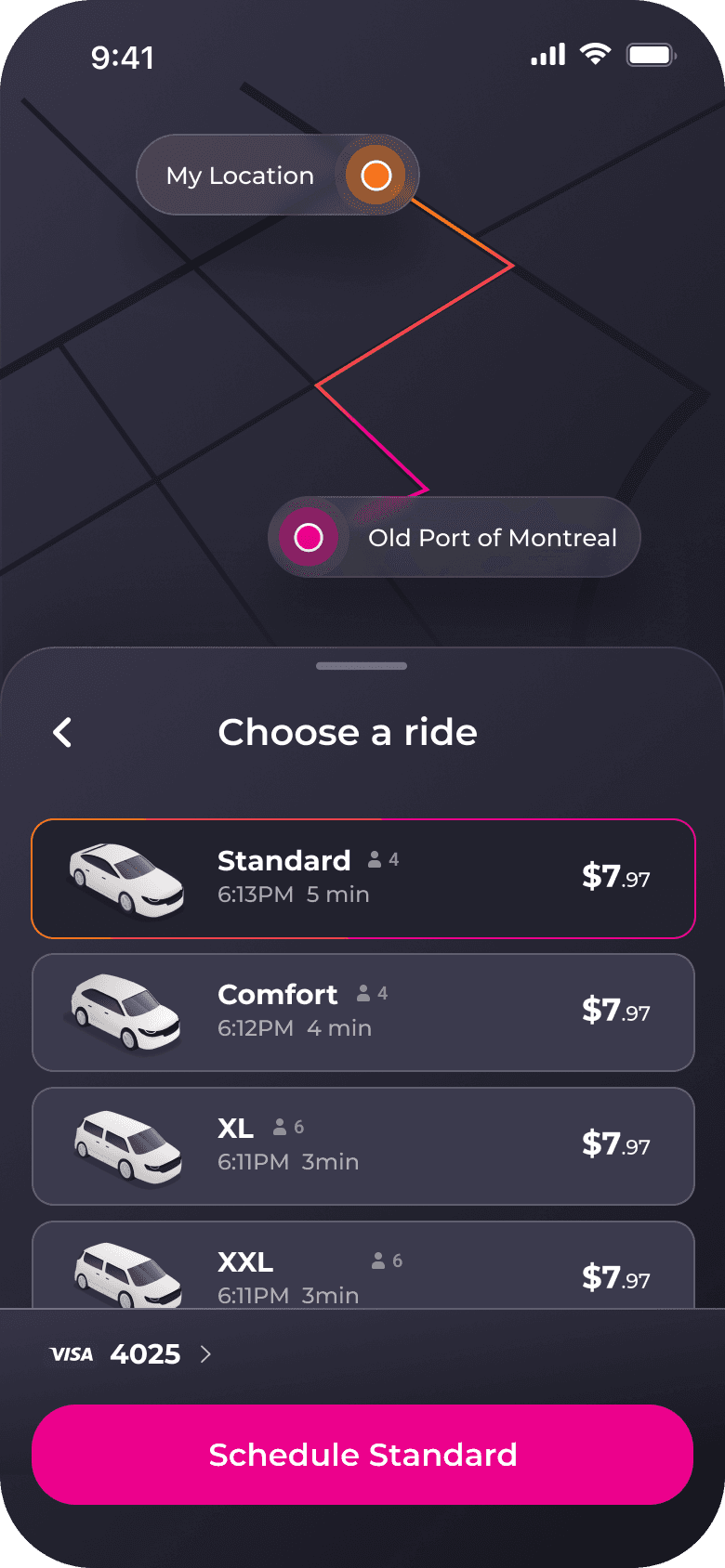
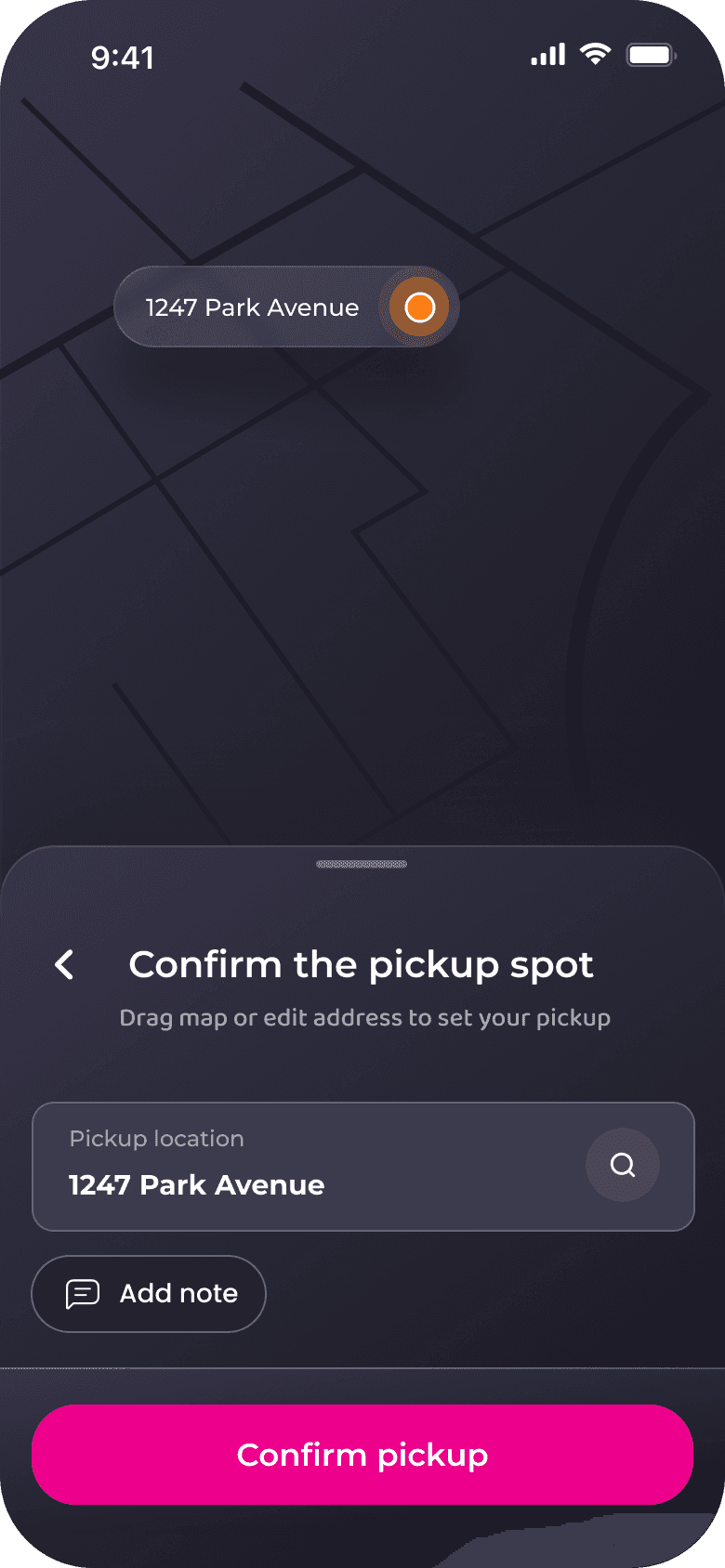
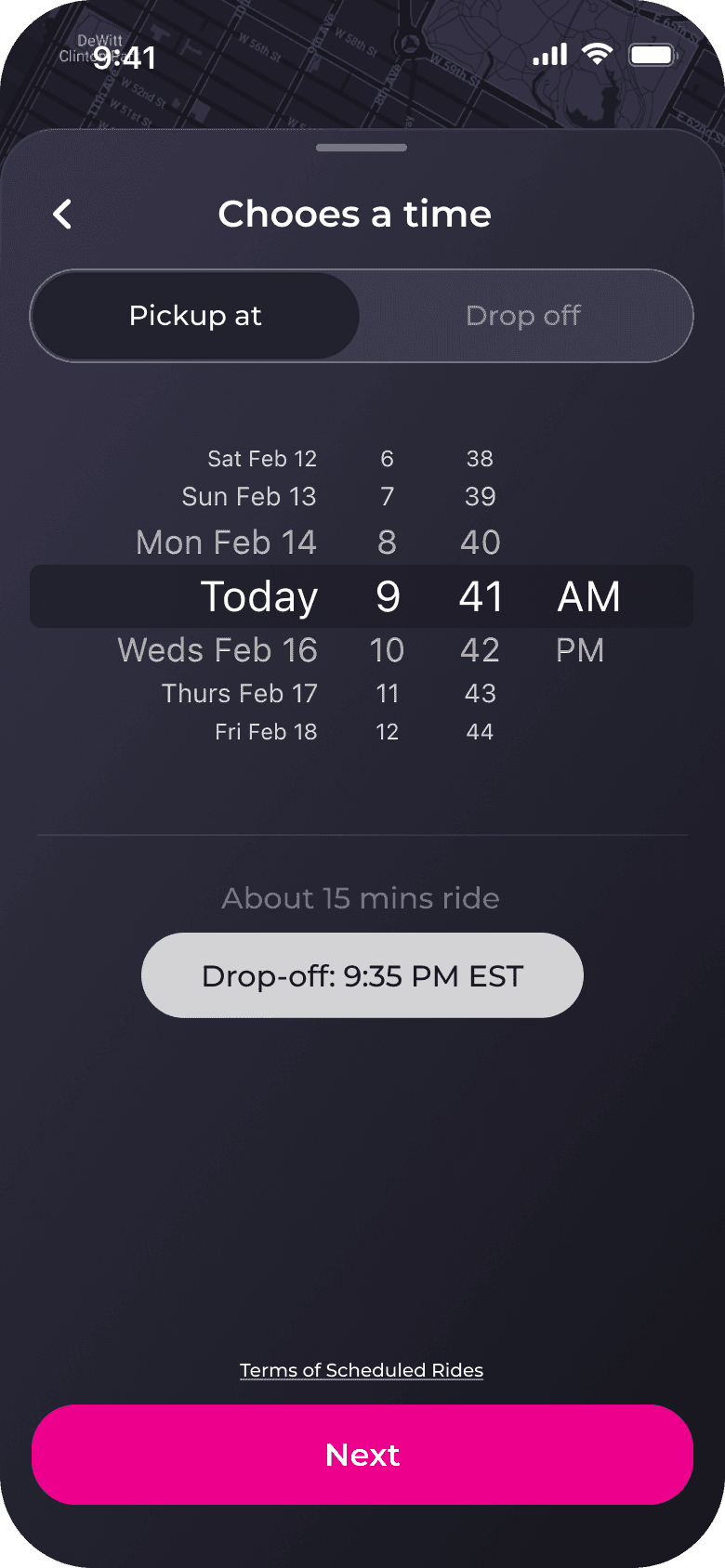
The resulting AI-powered scheduling app offers a seamless user experience, allowing individuals and businesses to effortlessly manage their schedules.
Why this solution was the most rational choice
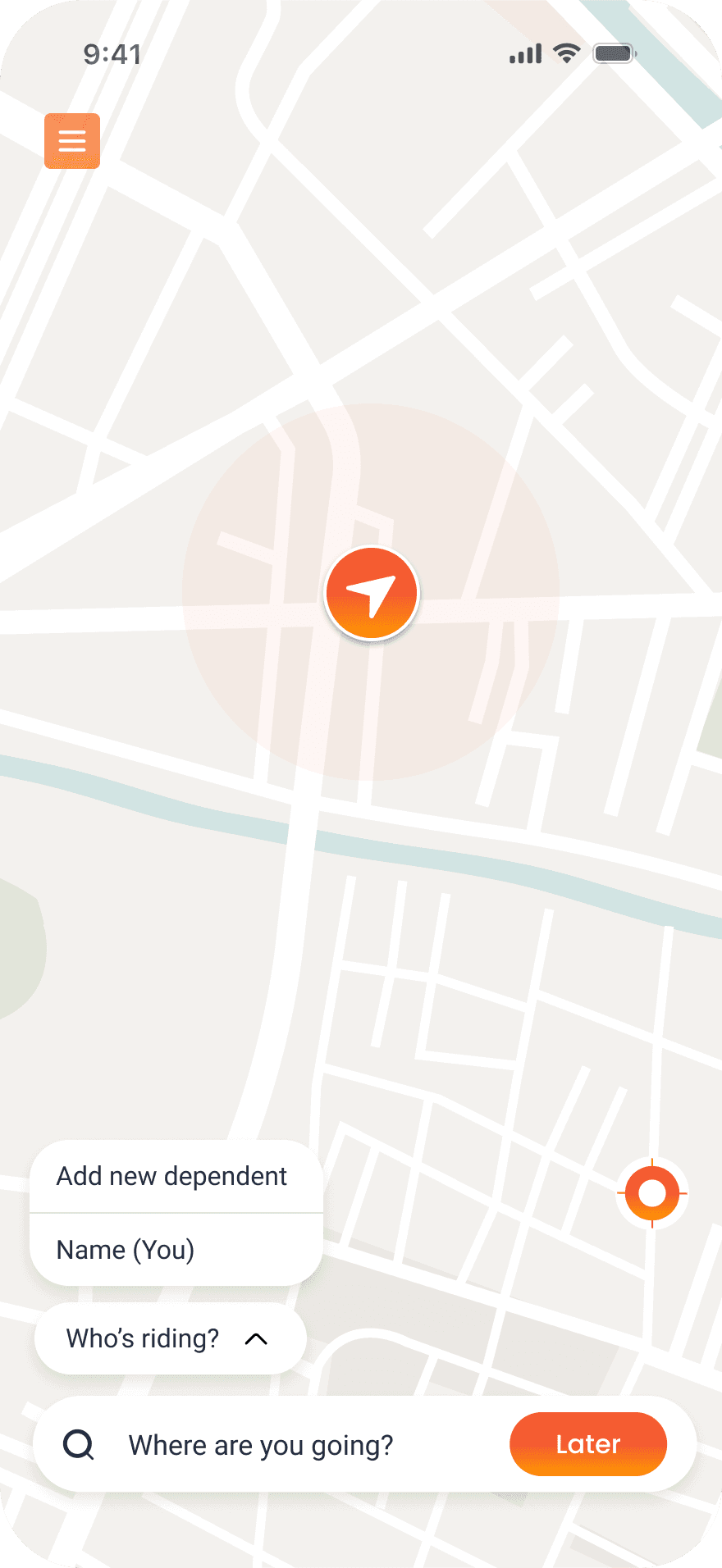
BEFORE
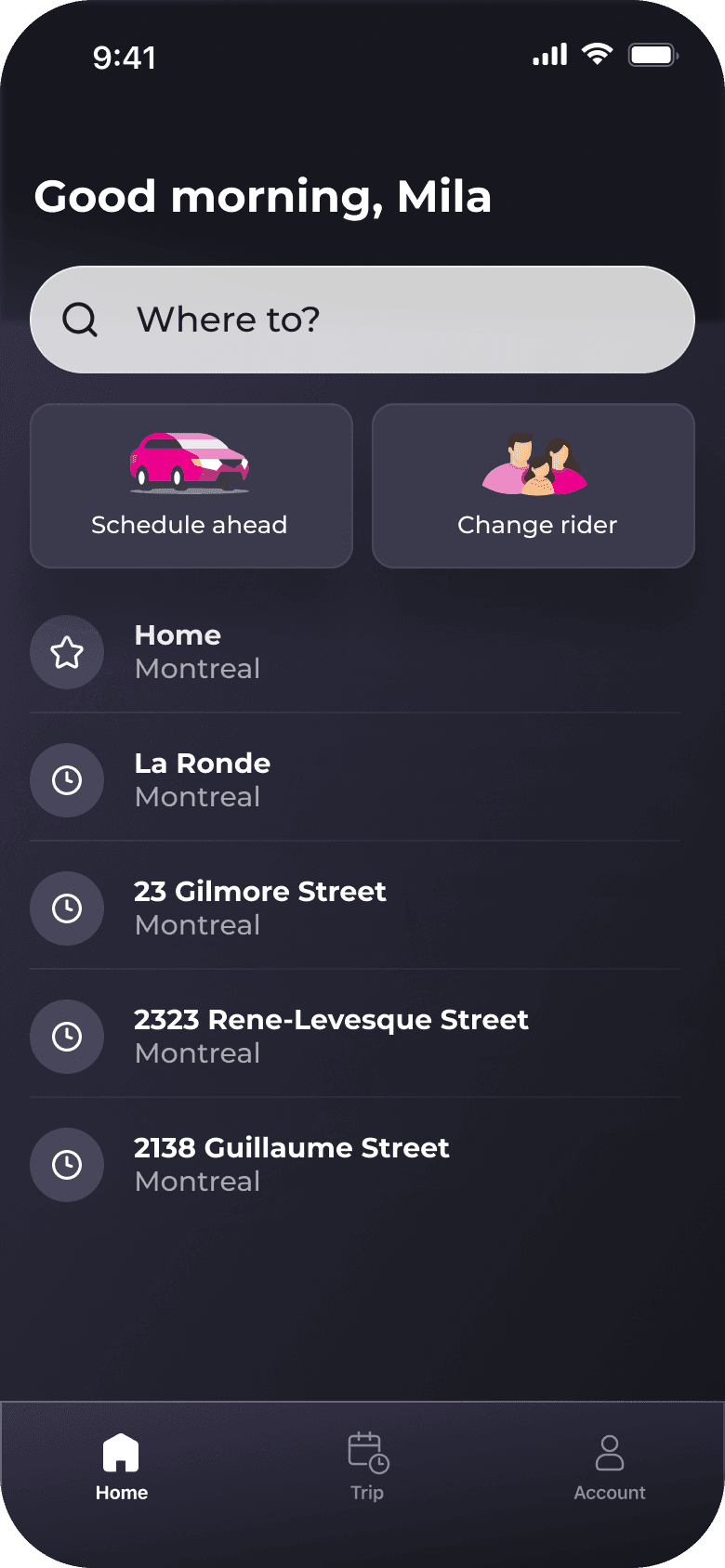
AFTER
1
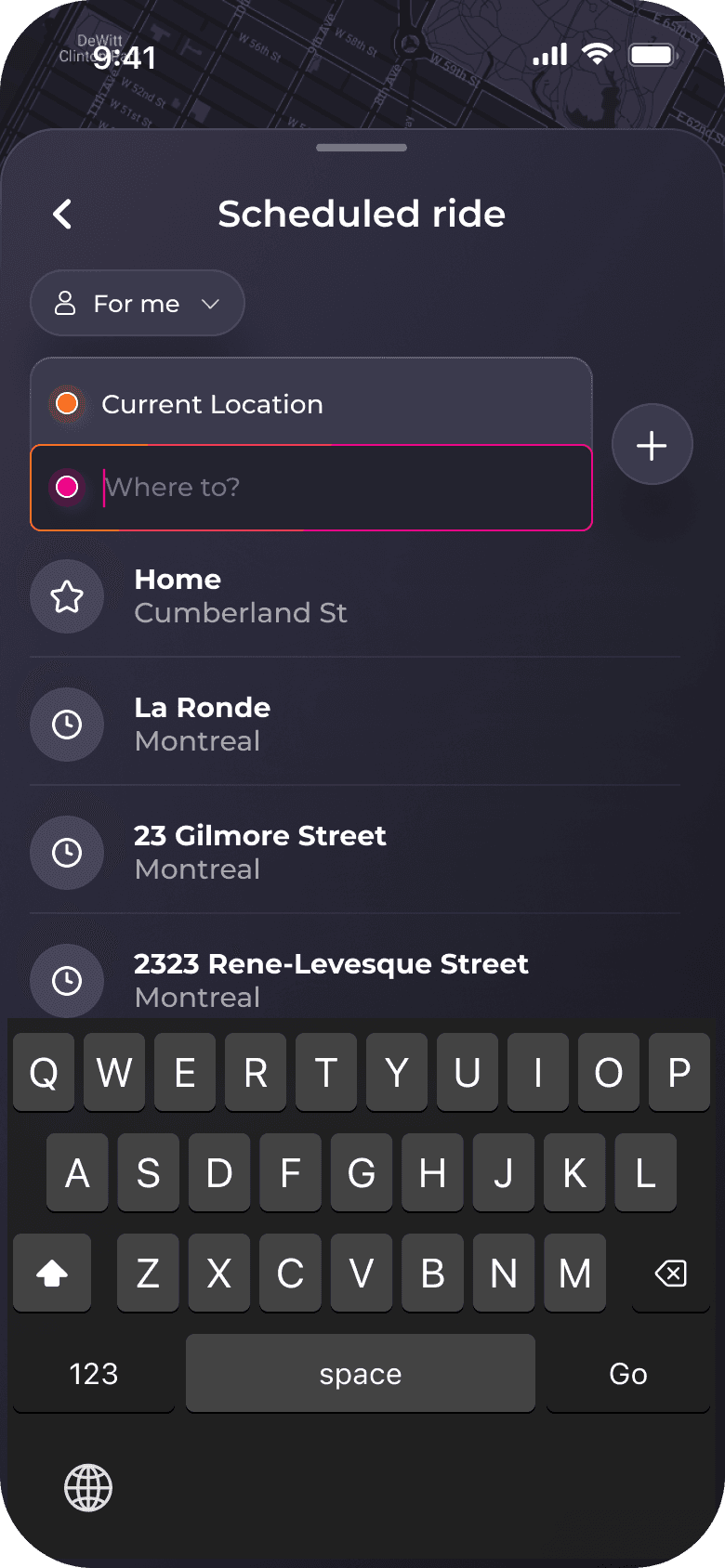
"Where to?" as Primary Focal Point
Research finding: 100% knew destination before opening. Asked "What's your first thought?" → All said "Tell it where I'm going"
Hypothesis: Leading with destination search matches mental model → faster first action
Validation: Time to first action: 8.3s → 1.8s (78% reduction). 14 of 14 clicked search immediately
2
Removed Map Interface
Research finding: Screen recordings showed 0 of 12 participants interacted with map. All looked for text input
Hypothesis: Map signals exploration, but users need confirmation (they already know facility locations)
Validation: Post-redesign: "This is clearer" (11 of 14). No one asked "where's the map?"
3
Surfaced Saved Locations on Home
Research finding: 16 of 18 visit same 2-3 facilities monthly. Follow-up interviews: "Why do I have to type this every time?"
Hypothesis: Recognition > recall (Nielsen heuristic #6). Saved locations reduce friction for 87% of trips
Validation: 83% of validation participants chose saved location when available. Task time: 8m 34s → 2m 41s
4
Unified Dark Mode Throughout
Research finding: 8 of 12 testing sessions happened 6pm-9pm (after work). Light mode: 5 participants squinted, complained of glare
Hypothesis: Dark mode reduces eye strain + improves legibility on older OLED screens (67% had iPhone 8 or older)
Validation: Trust score: 5.8 → 8.9 (+53%). Zero brightness complaints. Battery consumption reduced ~30% on OLED devices
Results
Here, the outcomes and achievements of the project are highlighted, including user feedback, adoption rates, and industry recognition.
User engagement
Increased session duration by 25% due to improved navigation and playlist management features
Conversion rates
Blues saw a 15% increase in premium subscriptions following the redesign, thanks to a clearer call to action and streamlined onboarding process.
Growing User Base
The app quickly gained traction among individuals and businesses worldwide, with a steady increase in user adoption and engagement.